
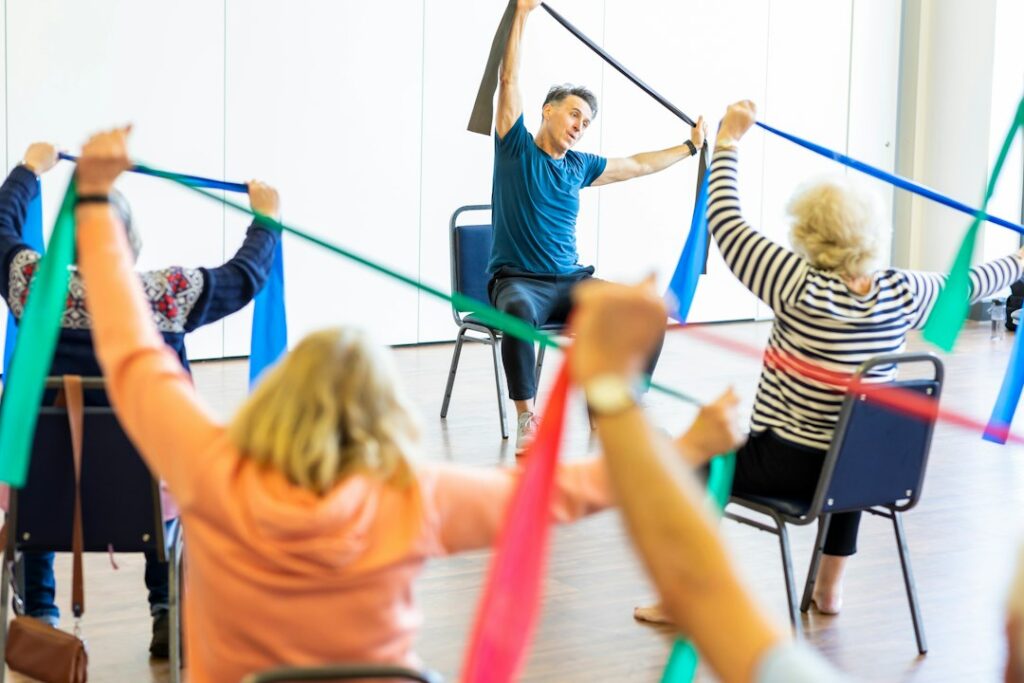
Integrative therapies can add comfort, movement, social connection, and emotional support to assisted living routines. In Fort Washington, PA, these approaches may be especially useful during seasonal weather changes, when outdoor activity becomes less predictable and residents spend more time indoors.
Integrative care does not replace medical treatment. Instead, it combines standard health care with carefully selected practices that support a resident’s overall well-being.
What are integrative therapies in assisted living?
Integrative therapies are supportive practices used alongside conventional medical care. They may address physical comfort, stress, sleep, mobility, mood, communication, or social engagement.
Examples can include:
- Music and singing activities
- Guided breathing or meditation
- Gentle chair yoga or stretching
- Massage provided with appropriate precautions
- Art, gardening, and other creative activities
- Aromatherapy used cautiously
- Pet or animal-assisted activities
- Acupuncture or other services provided by qualified practitioners
- Relaxation, reminiscence, and sensory-based programs
The purpose is not to claim that every therapy treats a disease. The practical goal is to help residents function more comfortably and participate in daily life.
Which therapies are commonly used?
Music-based activities are among the most adaptable options. Familiar songs may encourage conversation, movement, memory recall, or emotional expression. A resident does not need musical training to benefit from listening, humming, rhythm instruments, or group singing.
Mind-body practices may include slow breathing, guided relaxation, mindfulness, tai chi-inspired movements, or chair-based stretching. These activities can be modified for residents who use walkers, wheelchairs, or other mobility supports.
Creative therapies use painting, drawing, crafts, photography, gardening, cooking-related activities, or storytelling. These programs can support self-expression without relying entirely on memory or verbal communication.
Massage may help some residents with muscle tension or relaxation, but it is not appropriate for everyone. Skin conditions, fragile tissue, recent surgery, blood-clotting concerns, bone weakness, or certain medications may affect whether massage is safe.
Can integrative therapies help residents with dementia?
They may help with engagement, communication, and comfort, but they should not be presented as a cure for dementia. Familiar music, sensory activities, simple movement, and reminiscence can sometimes reduce boredom or distress and create opportunities for connection.
The approach should match the resident’s abilities and preferences. A person living with memory loss may respond better to a short music session than to a lengthy class with multiple instructions.
Helpful adaptations may include:
- Using familiar objects, songs, or photographs
- Offering one instruction at a time
- Keeping sessions brief and predictable
- Reducing background noise
- Watching for signs of fatigue or overstimulation
- Allowing the resident to observe rather than participate actively
A change in behavior should not automatically be treated as a need for an activity. Sudden agitation, withdrawal, confusion, or sleep changes can also signal pain, infection, medication effects, dehydration, or another health concern.
Are supplements and herbal products safe?
Not automatically. “Natural” does not mean risk-free, especially for older adults who may take several prescription or over-the-counter medicines.
Herbal products and dietary supplements may interact with medications, affect blood pressure or blood clotting, or cause side effects. Product quality can also vary. Residents should not begin a supplement through an activity program, family suggestion, or online recommendation without reviewing it with the appropriate health care professional.
This includes products marketed for sleep, memory, pain, anxiety, energy, or joint health. A supplement should be recorded as part of the resident’s medication and health information so that potential interactions are not overlooked.
How should a community evaluate an integrative therapy?
A safe program begins with a clear purpose. Staff and families should be able to explain whether the activity is intended to support relaxation, movement, social connection, pain coping, sleep routines, or another specific goal.
The following questions are useful:
- Who leads the activity, and what training do they have?
- Can the activity be adapted for limited vision, hearing, balance, or memory?
- What health conditions might make participation unsafe?
- How are consent and personal preferences handled?
- What happens if a resident becomes tired, uncomfortable, or distressed?
- Is the practice documented in the care plan when appropriate?
- How is the effect evaluated over time?

A reputable program should not promise guaranteed results or suggest that residents stop prescribed treatment. It should also respect a resident’s right to decline.
What safety issues matter most for older adults?
Safety depends on the individual therapy and the resident’s health history. A gentle activity for one person may be unsuitable for another.
Important considerations include:
- Fall risk during standing exercises or walking activities
- Dizziness or blood pressure changes during movement
- Skin fragility during massage or hands-on care
- Allergies or breathing sensitivity related to scents
- Hearing or sensory overload during music programs
- Swallowing concerns involving food-based activities
- Bleeding risk related to certain procedures or medications
- Infection-control practices for shared equipment or animal visits
Outdoor programs also require seasonal planning. In warmer months, hydration, shade, and heat exposure matter. During colder or wetter periods, indoor walking routes, appropriate footwear, and safe transitions between rooms become more important.
How can families participate without overwhelming a resident?
Families can help by sharing information about the resident’s history, preferences, and dislikes. A favorite style of music, former hobby, religious practice, occupation, or daily routine may help staff choose more meaningful activities.
Participation should remain voluntary. Some residents prefer one-on-one activities, while others enjoy groups. A person who once enjoyed gardening may now prefer sorting seeds, touching herbs, viewing plants, or discussing past gardens rather than doing physical yard work.
Families can also ask whether a therapy is being used as a comfort activity or as part of a broader care plan. Clear expectations help prevent misunderstandings about what the activity can realistically accomplish.
What should residents ask before trying a new therapy?
Before participating, residents or decision-makers can ask what the therapy involves, how long it lasts, and whether it can be modified. It is also reasonable to ask what evidence supports the practice and what risks may apply to the resident’s particular health conditions.
The most useful integrative programs are personalized, modest in their claims, and coordinated with regular medical care. They make room for comfort, dignity, culture, personal choice, and changing abilities—not just a fixed schedule of activities.
